What is water injection?
Water injection is the process of pumping water into an oil reservoir through injection wells to support reservoir pressure. When injected water is used to displace oil towards production wells, the method is called waterflooding. Operators use treated seawater, produced water or other suitable sources, depending on the field’s requirements.
How does water injection help recover oil?
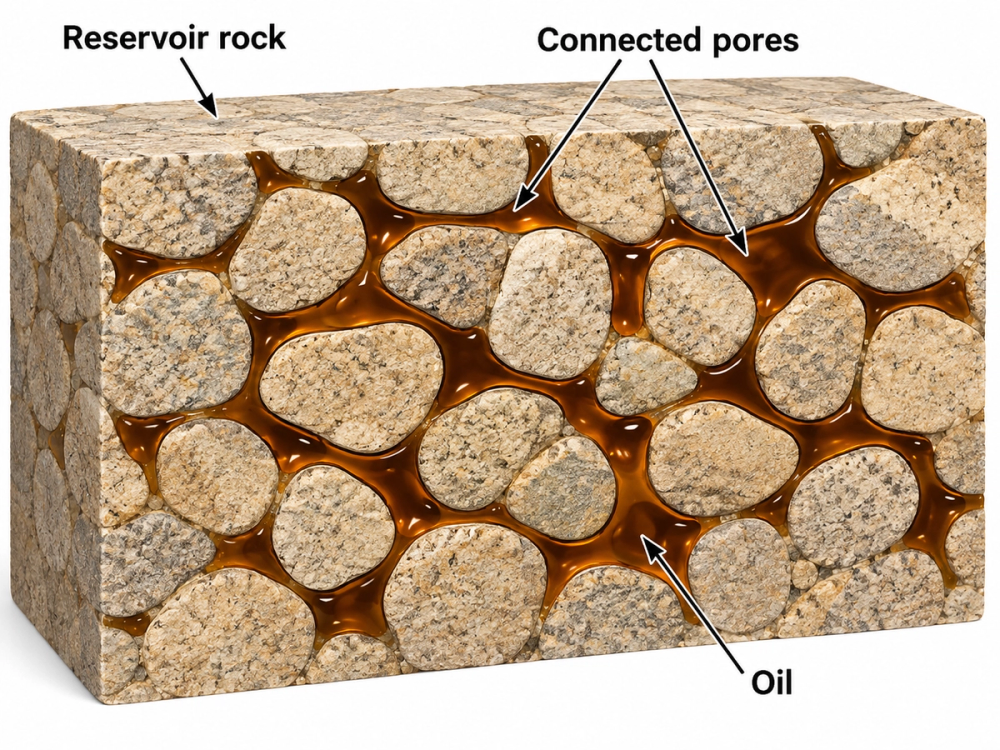
Oil sits within connected pores and spaces in reservoir rock. It does not collect in a large underground lake.
As oil and gas are produced, reservoir pressure can fall. Water injection helps replace some of the volume removed and supports the pressure needed for continued production. The injected water also moves through the rock, displacing oil towards production wells.
Think of water moving through a sponge containing oil. It can push some of the oil ahead of it, but it will not reach every part equally. Reservoir geology, well placement and operating conditions determine how effectively water injection works.
For offshore fields, seawater provides a readily available water source. Before injection, however, it needs treatment suited to the reservoir and the equipment it will pass through.
Why injection water quality matters
“A glass of seawater may look clear and still contain substances that cause problems in an injection system.”
Some risks develop in surface equipment. Others occur deep underground, where intervention is more difficult and expensive.
Four risks deserve particular attention:
01
Clogging
Suspended particles and biological material can obstruct equipment and the small flow paths within reservoir rock.
02
Scale
Dissolved sulphate can react with minerals in formation water, creating solid deposits that restrict flow.
03
Corrosion
Dissolved oxygen and other aspects of water chemistry can accelerate deterioration of metal equipment.
04
Reservoir souring
Microbial activity can generate hydrogen sulphide, creating additional safety, corrosion and production challenges.
The commercial consequences can include reduced injection capacity, more maintenance and additional treatment requirements. Good injection water quality helps manage these risks before they become operating problems.
Sulphate removal for water injection: controlling scale and souring
Sulphate is naturally present in seawater. Two important reasons for removing it are scale control and reservoir souring control.
Reducing scale formation
When injected seawater meets formation water containing barium or strontium, sulphate can react with these dissolved minerals to form hard deposits.
These deposits can restrict flow in the reservoir, wells, and downstream equipment. Reducing sulphate before injection helps lower the risk of these reactions.
Reducing reservoir souring
Under suitable conditions, sulphate-reducing bacteria use dissolved sulphate and generate hydrogen sulphide (H₂S). An increase in H₂S within the reservoir is known as reservoir souring.
H₂S is toxic and can contribute to corrosion. Its presence can also increase the demands on production equipment, materials and gas treatment.
Sulphate removal reduces the sulphate available to these bacteria, helping control this route to souring.
Sulphate removal does not guarantee that souring will never occur. The required strategy depends on reservoir conditions, microbial activity and other potential sources of H₂S.
Seawater treatment for water injection
The treatment system should prepare seawater for the field’s agreed injection specification. A membrane-based treatment train can include the following stages.
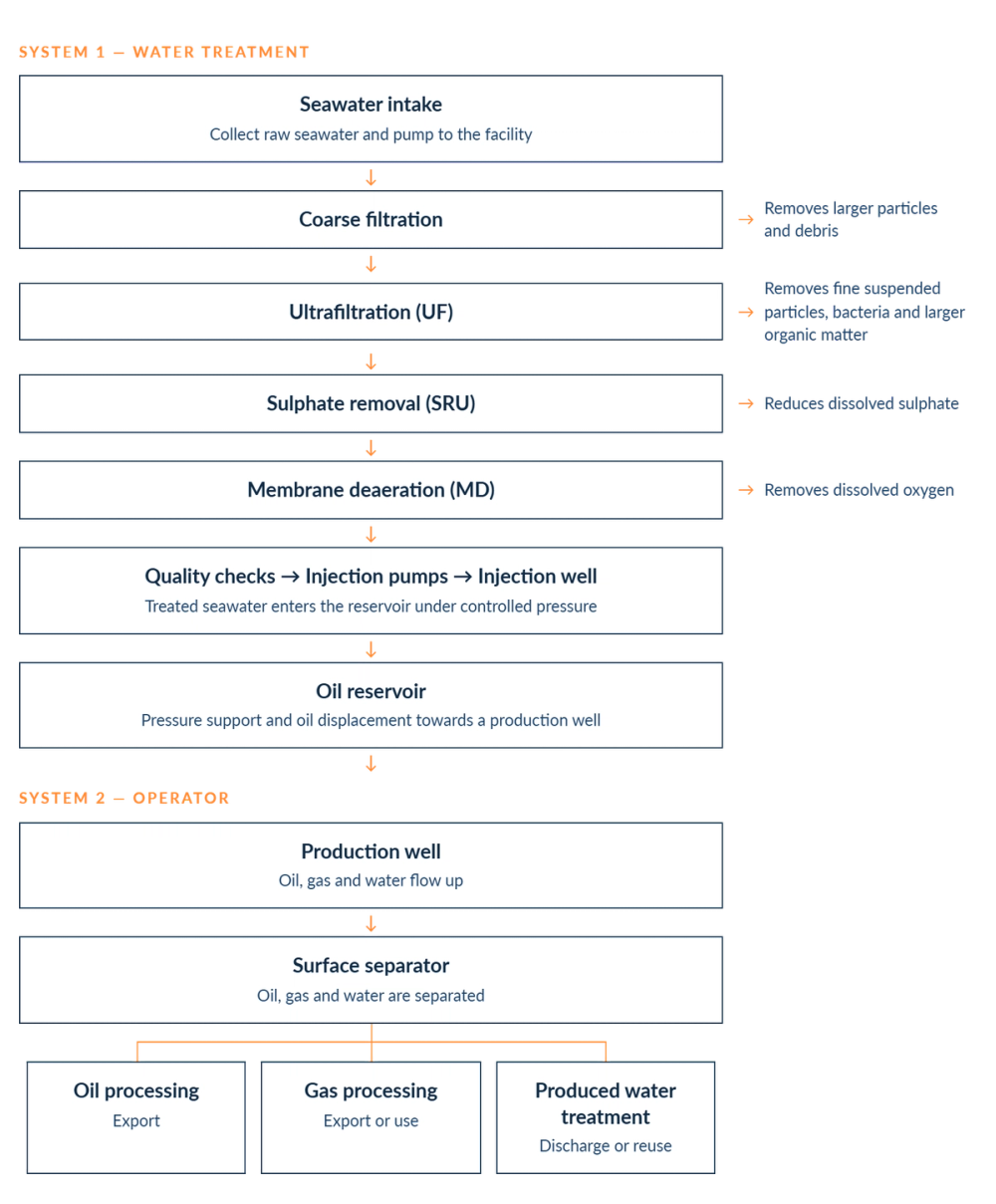
Coarse filtration
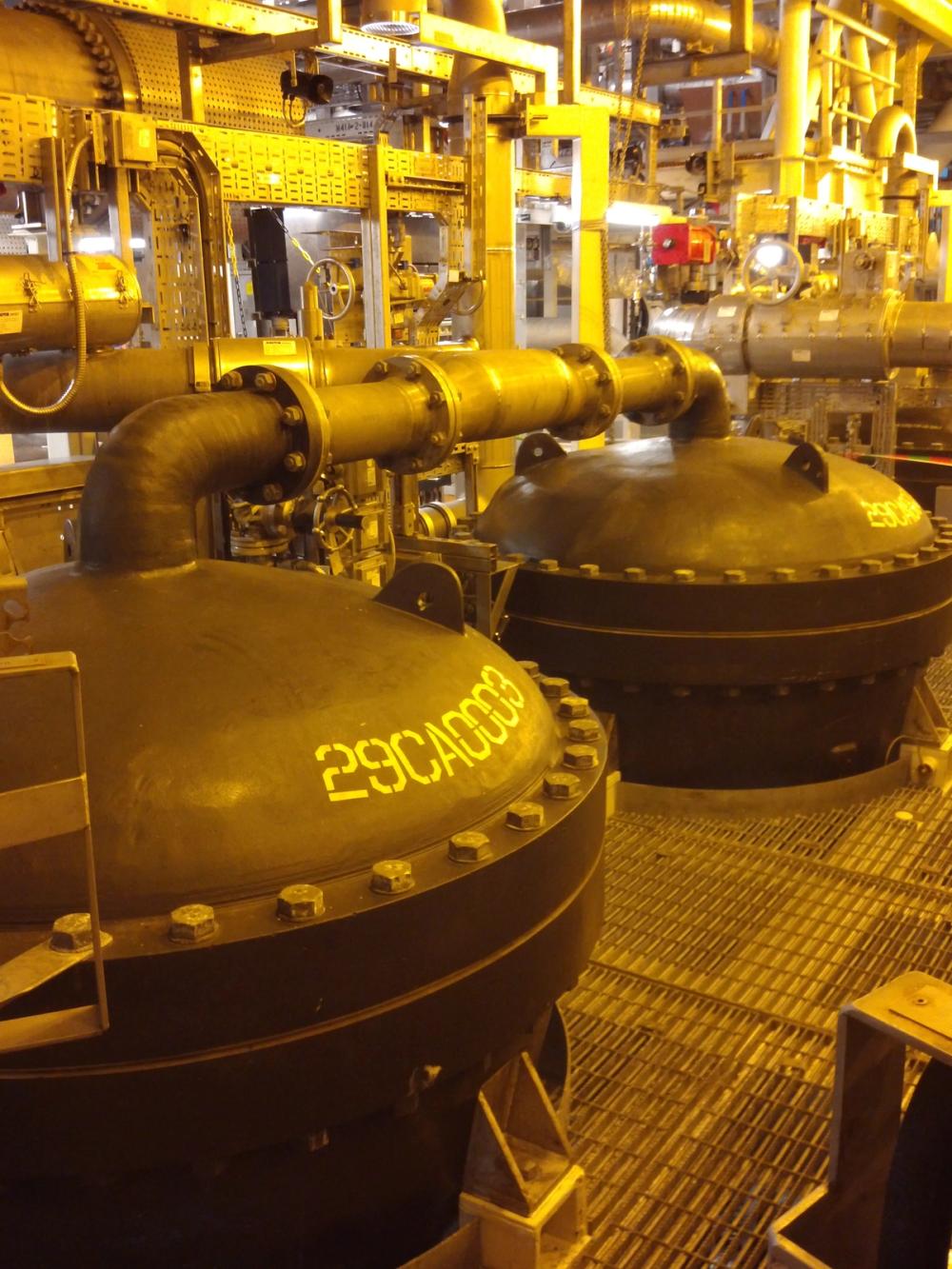
Coarse filters remove larger particles and debris, protecting pumps and downstream treatment equipment.
Ultrafiltration uses fine membranes to remove suspended particles, microorganisms and larger organic material.
This provides cleaner feedwater for downstream processes and helps reduce fouling of sensitive membranes. Ultrafiltration does not remove dissolved sulphate or oxygen; those need separate treatment steps.
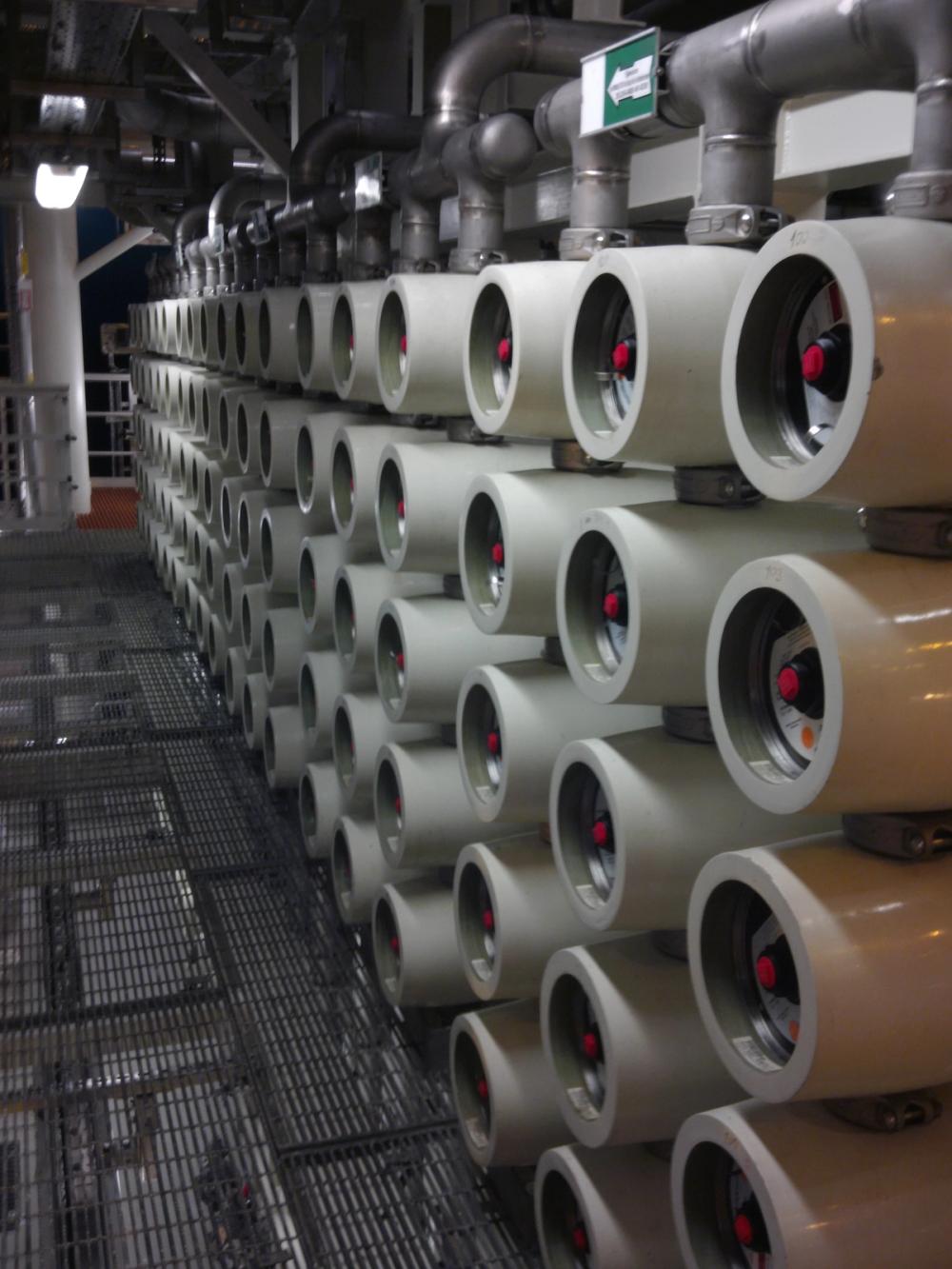
A sulphate removal unit uses selective nanofiltration membranes to reduce dissolved sulphate.
The treated water passes onwards through the system, while a separate concentrate stream carries away much of the removed sulphate. The required outlet concentration depends on the field’s scale and souring assessment.
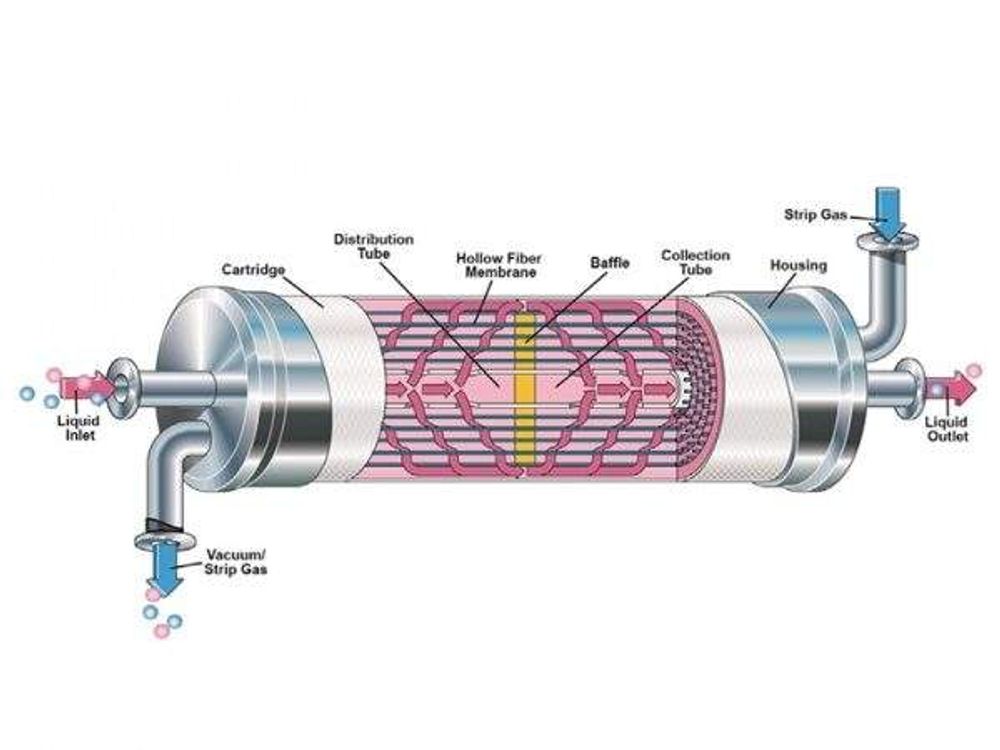
Membrane deaeration removes dissolved oxygen using membrane contactors with a vacuum, sweep gas or both.
Reducing oxygen helps protect injection pipework and equipment from oxygen-driven corrosion.
Injection and ongoing control
After treatment, pumps deliver the water at the pressure required for injection.
Chemical dosing, monitoring and cleaning support the treatment process. Their purpose is to keep water quality and system performance within the agreed operating limits.
What injection water quality targets are typical?
There is no single specification suitable for every reservoir. Targets depend on reservoir rock, formation water chemistry, equipment materials and operating conditions.
The examples below show the difference between an outlet water quality target and equipment removal performance.
Parameter | Published Example | Why It Matters |
|---|---|---|
Dissolved oxygen | Membrane deaeration specifies an outlet target below 10 parts per billion (ppb) | Helps limit oxygen-driven corrosion |
Particle removal | 98% of particles larger than 2–10 microns for fine filtration and 99% removal above 0.1 microns for ultrafiltration | Helps protect equipment and reservoir flow paths |
Sulphate concentration | Treated water sulphate concentrations of 20–100 mg/L | Helps control sulphate scale and microbial souring |
For particles, size alone is insufficient. The injection specification should also define particle concentration, removal efficiency and measurement methods. For sulphate, the required outlet concentration must be established through the field’s scale and souring assessment.
Can produced water be reinjected?
Yes. Produced water—the water brought to the surface alongside oil and gas—can be treated and reinjected where field conditions allow.
Its treatment needs differ from those of seawater. Residual oil and suspended solids may need removal, and the water must be assessed against the intended injection requirements. Produced water reinjection therefore needs its own treatment and compatibility assessment.
Operators, EPC contractors and project teams do not need to become membrane specialists to ask the right questions.